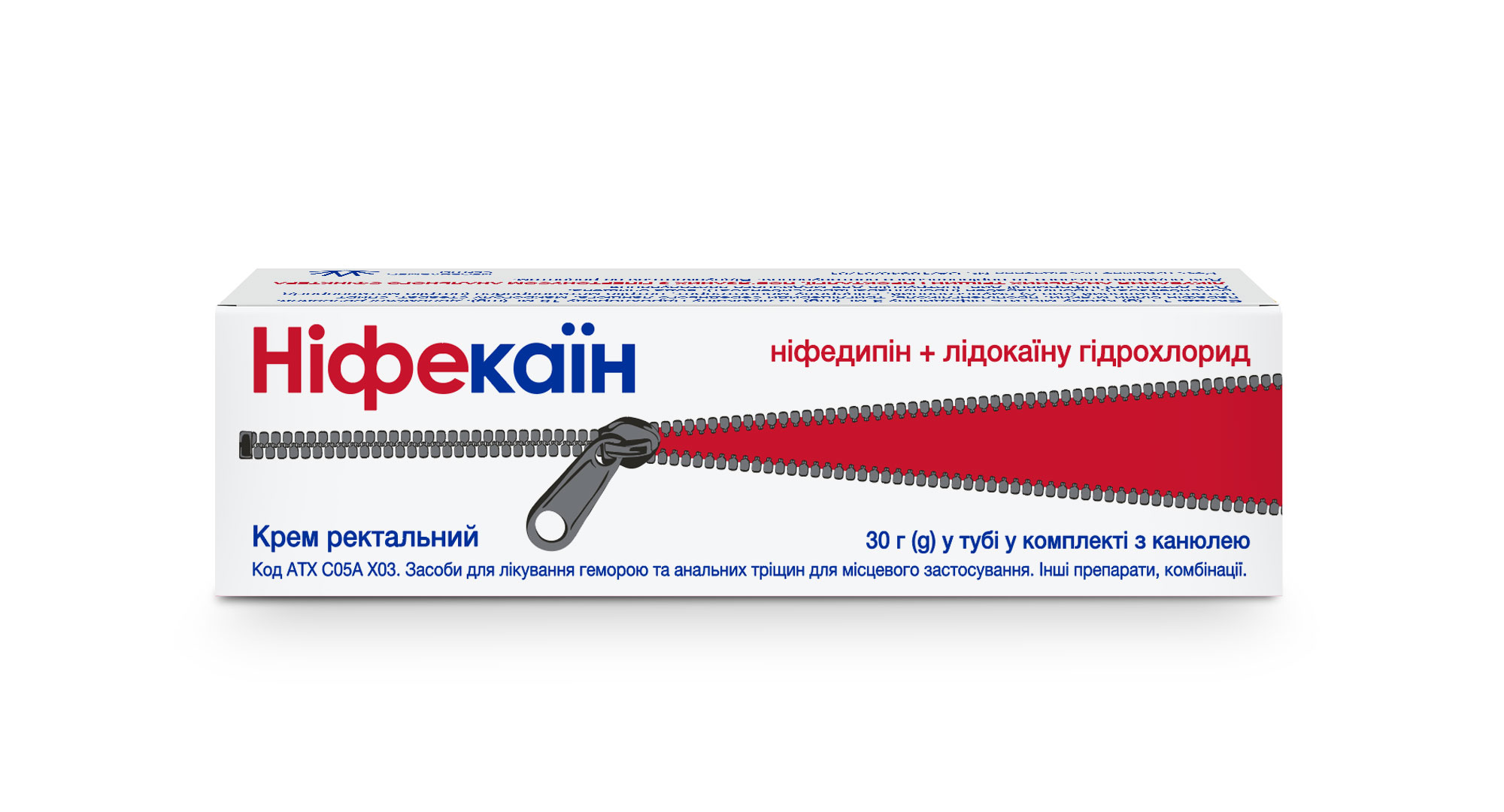
Nifecain rectal cream
Nifecain krem rektalnyiㅤ
Composition
1 g of cream contains 3 mg of nifedipine and 15 mg of lidocaine hydrochloride; excipients: white soft paraffin, propylene glycol, medium chain triglycerides, macrogol stearate, cetostearyl alcohol (type A) emulsified, glycerol monostearate, sodium methylparaben (sodium methylparahydroxybenzoate), propylparaben (propylparahydroxybenzoate), purified water.
Dosage form: Rectal cream. Main physical and chemical properties: Homogeneous yellow cream with a slight characteristic odor.
Pharmacotherapeutic group: Agents for the treatment of hemorrhoids and anal fissures for topical use. Other preparations, combinations. ATC code C05A X03
Pharmacological properties
Pharmacodynamics. Nifecain has a synergistic mechanism of action. Nifedipine is a dihydropyridine calcium channel blocker; when applied topically, it has a relaxing effect on peripheral smooth muscles. Nifedipine acts by reducing the hypertonicity of the internal anal sphincter.
Pharmacokinetics. The pharmacokinetic properties of Nifecain rectal cream were studied in healthy volunteers. Determination of active substances in the blood using a validated analytical method gave negative results, since nifedipine was not detected in the blood serum. In addition, only minimal traces of lidocaine were detected in 2 out of 12 patients. These ultra-low concentrations (below the threshold of quantitative determination) are much lower than the concentrations capable of exerting a therapeutic effect when lidocaine is administered systemically. Therefore, systemic action of Nifeсain cream as a result of absorption of active substances can be ruled out. This was confirmed by further clinical studies, during which no adverse effects were observed as a result of systemic absorption through the mucous membrane of the anorectal area.
Indications for use (instruction): Nifecain rectal cream
Treatment of anal fissures and proctalgia associated with anal sphincter hypertonicity.
Contraindications
Hypersensitivity to the active substances, in particular to lidocaine and other local anesthetics of the amide type, such as bupivacaine, etidocaine, mepivacaine, and prilocaine, or any other excipients included in the preparation. Expected or confirmed pregnancy and breastfeeding (see section “Use during pregnancy or breastfeeding”). Severe hypotension and heart failure.
Interaction with other medicinal products and other types of interaction. No interaction studies have been performed.
Patients taking class I antiarrhythmic drugs (e.g., tocainide, mexiletine) or other local anesthetics should use the drug with caution, as there is a risk of cumulative systemic effects due to the presence of lidocaine. Monoamine oxidase inhibitors enhance the local anesthetic effect of lidocaine. Treatment with Nifecain rectal cream may enhance the effect of antihypertensive agents due to the presence of nifedipine. Propranolol prolongs the half-life of lidocaine and increases the level of nifedipine in the blood plasma. Cimetidine may increase plasma levels of nifedipine and lidocaine. Concomitant use of Nifecain rectal cream by patients taking digoxin may lead to increased plasma levels of digoxin.
Special instructions for use. Local application of the drug in excessive doses and/or for a long period of time may cause sensitization, local hyperemia, and bleeding, which disappear after discontinuation of treatment. During clinical trials, no adverse effects due to possible systemic absorption of the drug were reported. Nifeсain rectal cream should be used with particular caution in patients with severe damage to the mucous membranes and inflammation in the area to be treated, as excessive absorption of the active substances is possible in such situations. Nifeсain should be used with caution in patients with diabetes mellitus or severe hepatic and/or renal insufficiency. Treatment with Nifeсain rectal cream in elderly patients, as well as in patients receiving beta-blockers or antihypertensive drugs, should be carried out under medical supervision. It is recommended to check blood pressure at the beginning of treatment and periodically throughout therapy. If treatment is ineffective (no improvement or worsening of symptoms), it should be discontinued and a doctor should be consulted. In addition, when treating hemorrhoids with Nifeсain, rectal cream, it is recommended to follow the rules of hygiene of the anus, maintain an active lifestyle, and follow the rules of healthy eating to ensure soft stools. Nifeсain rectal cream contains sodium methylparaben (sodium methylparahydroxybenzoate) and propylparaben (propylparahydroxybenzoate), which may cause allergic reactions (possibly slowed down). The presence of propylene glycol and cetostearyl alcohol (type A) emulsified may cause local skin reactions (e.g., contact dermatitis). Glycerol monostearate, which is part of the drug, may have a mild laxative effect.
Use during pregnancy or breastfeeding
Nifedipine and lidocaine cross the placental barrier and enter breast milk. Studies in rats and rabbits have shown that nifedipine has teratogenic effects. Lidocaine has not been shown to pose any risks to the fetus. When calcium channel blockers, in particular nifedipine, are used as a tocolytic agent during pregnancy, especially in cases of multiple pregnancies (twins and more), intravenously and/or in combination with beta-2 agonists, acute pulmonary edema has been observed. Therefore, this drug is not recommended for use in pregnant and breastfeeding women.
Ability to influence the speed of reaction when driving a vehicle or other mechanisms
Simultaneous administration of nifedipine with alcohol may adversely affect the speed of reaction.
The drug Nifeсain, rectal cream, is intended for topical application and acts locally, therefore, the effect of the drug on the ability to drive vehicles or other machinery cannot be predicted.
How to use
For endorectal and perianal use. Apply the cream twice a day for at least three weeks. Method of application: lie on your left side, remove the cap from the tube and secure the cannula, squeeze a small amount of cream onto the cannula and insert it into the anal opening. Press the end of the tube to squeeze out approximately one centimeter of cream (one centimeter of the tube contains approximately 2.5–3 g of cream).
Children. Not recommended for use in children due to lack of data on safety and efficacy.
Overdose. No cases of systemic toxicity due to overdose with topical application of Nifeсain rectal cream have been reported. In case of poisoning after topical application of the drug, systemic effects are expected to be similar to those commonly observed with other routes of administration of active substances. In case of severe nifedipine intoxication, consciousness disorders, including coma, decreased blood pressure, cardiac arrhythmia, and cardiogenic shock may occur. In case of accidental ingestion of the drug (in case of swallowing several grams of cream), systemic symptoms caused by the use of lidocaine hydrochloride are expected. Depending on the dose, they may manifest as severe cardiovascular disorders (decreased blood pressure, increased sweating, pale skin, bradycardia, arrhythmia, cardiac depression, shock, and in particularly severe cases, cardiac arrest) or reactions related to central nervous system disorders (headache, dizziness, blurred vision, diplopia, tinnitus, drowsiness, numbness of the extremities, chills, anxiety, convulsions, dyspnea, and in particularly severe cases, respiratory failure). Methemoglobinemia is possible. Treatment. In case of overdose, careful monitoring of vital functions, supportive measures to maintain oxygen levels, and symptomatic treatment of central nervous system and cardiovascular disorders are required. For example, beta-sympathomimetic agents can be used for bradycardia, atropine and in cases of severe hypotension, calcium gluconate (10–20 ml intravenously slowly of a 10% solution) and, possibly, dopamine or norepinephrine. A significant proportion of toxic reactions to local anesthetics and lidocaine manifest themselves in the central nervous system; dizziness occurs, often accompanied by visual and hearing impairments, such as difficulty with accommodation and tinnitus. In the most severe cases, central nervous system depression and convulsions are possible. Treatment is symptomatic.
Side effects. Local reactions such as pain, burning, itching, hyperemia, and bleeding may occur. These effects subside when treatment is discontinued. In very rare cases, topical application of lidocaine-containing preparations has caused allergic reactions (in severe cases, anaphylactic shock). During clinical trials, no side effects were observed due to the possible systemic absorption of the two active ingredients (headache, dizziness, peripheral vasodilation, hypotension, vertigo, and tremor). Frequency unknown: pulmonary edema (cases reported when used as a tocolytic during pregnancy). Systemic adverse reactions associated with lidocaine are identical in manifestation to those associated with local anesthetics of the amide group.
Storage conditions
Store in the original packaging at a temperature not exceeding 25 °C. Keep out of reach of children.
Expiration date: 3 years. Use within 30 days after opening the tube.
Release form
30 g of cream in a tube with a cap; 1 tube in a set with a cannula in a cardboard box.
Dispensing category. Prescription only.
Manufacturer
VAMFARMA S.R.L. or New.Fa.Dem. S.r.l.
Location of the manufacturer and address of its place of business. VIA KENNEDY, 5, COMASSO (LO), 26833, Italy or ZONA INDUSTRIALE – 80014 GIUGLIANO IN CAMPANIA (NA), Italy
This section of the site contains information about medical devices, their properties, methods of use, as well as other specialized information intended for healthcare professionals. The information on medical devices contained in this section is not a guide for self-diagnosis and/or treatment. UA “PRO-PHARMA” LLC is not responsible for any negative consequences resulting from the independent use of the information in this section. By using the information in this section, you do so independently, realizing that: self-medication can harm your health, before using medical devices, you must read the instructions and consult a doctor.
LLC SA Pro-Pharma is not responsible for possible negative consequences arising from the independent use of information from this section.
Using the information from this section, you do it yourself, understanding that: self-medication can be harmful to your health, you must read the instructions and consult a doctor before using medicines.
and confirm my agreement with it.
This section of the site contains information about medicines, their properties, methods of use, as well as other specialized information intended for healthcare professionals. Information about medicines contained in this section is not a guide for self-diagnosis and/or treatment. LLC "UA "PRO-PHARMA" is not responsible for possible negative consequences that may arise as a result of self-use of information from this section. By using information from this section, you do it independently, understanding that: self-medication can harm your health, before using medicines, you must read the instructions and consult a doctor.